

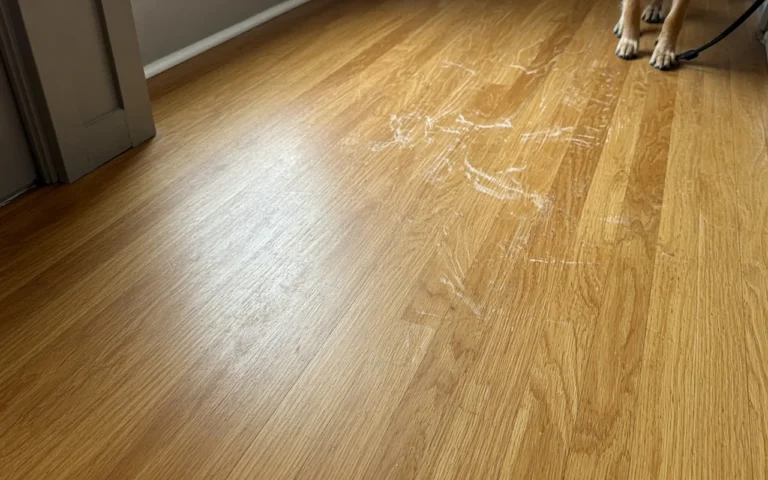
Scratch repair works best when you match the method to the depth. A scuff in the finish needs a different approach than a gouge that cuts into bare wood. Start light; aggressive sanding is hard to undo.
Judge the depth
Fingernail test: if your nail does not catch, you are often still in the finish. If it catches, wood fiber is involved. Check whether the scratch is blonde (fresh wood) or dirty/oxidized.
Light finish scratches
Clean the area. Try a manufacturer-compatible polish, restorative oil, or a blend of stain marker and wipe-on finish for fine lines. Work with the grain and wipe excess so you do not leave a shiny patch.
Deeper scratches and small gouges
Clean, then use a wax fill stick, tinted wood filler, or burn-in stick for deeper voids. Level carefully, then spot-finish to match sheen. Large areas of deep damage may need board replacement or professional screening.
What not to do
Do not flood unfinished wood with water-based markers that raise grain wildly. Do not sand through veneer on engineered floors. Avoid mixing random “miracle” oils over unknown factory finishes without a test spot.
Prevent the next round
Felt pads, No-scratch entry mats, trimmed pet nails, and keeping grit off the floor do more than any repair kit. Recoat high-traffic paths before the wear layer fails.
For more repairs like this, start in the Floor Repair hub. If you are working through a related problem next, see Water Damaged Wood Floor Repair (Easy DIY Restoration Steps) or Warped Wood Floor Repair (Fix It Yourself Without a Pro).
