

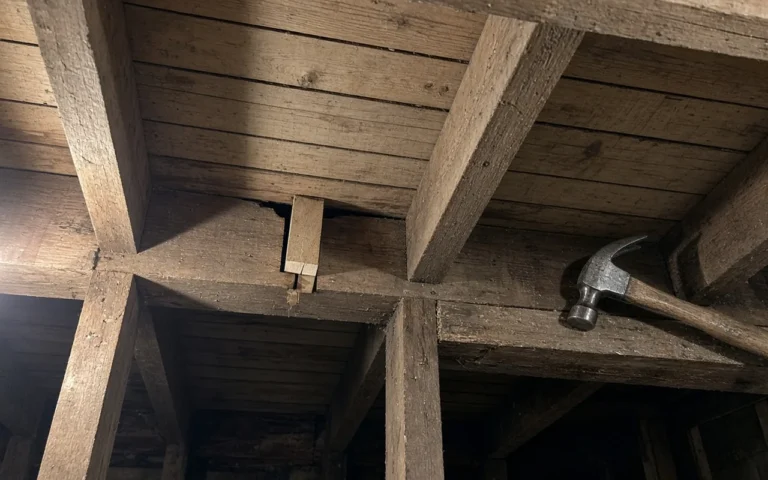
Most squeaks are wood rubbing on wood or on a nail that has backed out. You can quiet many of them from above or below without replacing the floor — if you can reach the rub point and fasten it again.
Find the rub point
Have someone walk the noisy path while you listen from below (basement or crawl space) or watch for movement at seams. Mark boards with painter’s tape. Note whether the noise is at a seam, over a joist, or near stairs.
Fixes from below
If you have access, shims between subfloor and joist, construction adhesive along a gap, and screws up into the subfloor (avoiding pipes and wires) are classic quieting methods. Work gradually — over-driving a shim can create a new hump.
Fixes from above
Without basement access, trim-head screws into joists (predrill, countersink, fill) or specialty squeak kits can help. Match fastener length to floor thickness so you do not poke through a ceiling below. Finish-friendly fillers hide the heads after.
When squeaks point to a bigger issue
Widespread movement, soft spots, or squeaks after water damage may mean subfloor or joist trouble. Those need structural evaluation, not just another screw.
Keep the quiet
Seasonal humidity swings can reopen tiny gaps. Maintaining steady indoor humidity and avoiding heavy point loads on weak spans reduces new noises.
For more repairs like this, start in the Floor Repair hub. If you are working through a related problem next, see Water Damaged Wood Floor Repair (Easy DIY Restoration Steps) or Warped Wood Floor Repair (Fix It Yourself Without a Pro).
